
Semi-finished product production: processes, equipment and standards

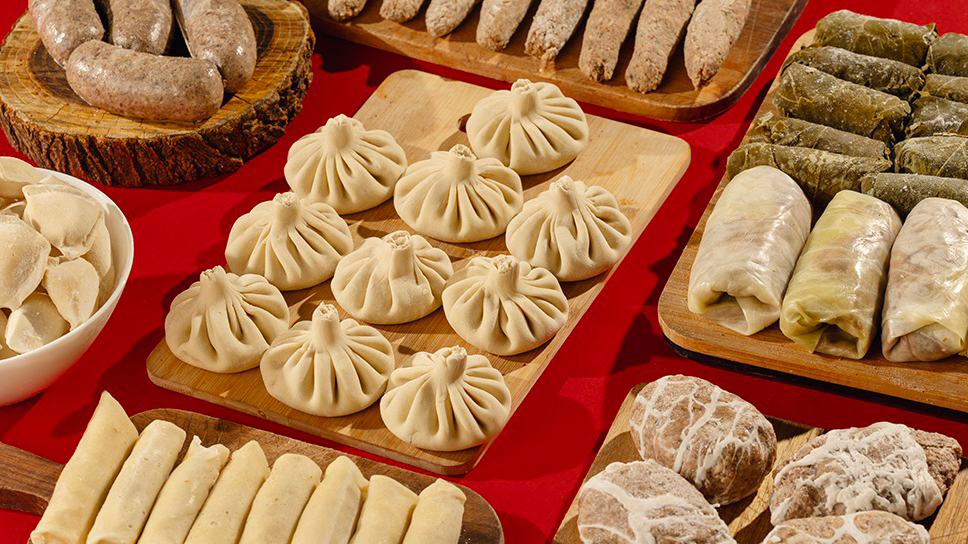
In the modern food industry (HoReCa and Retail sectors), one of the fastest growing and highly profitable directions is the production of semi-finished products. With the acceleration of the pace, consumers are increasingly choosing premium quality, quick-to-prepare frozen products. Khinkali, pelmeni, kebabs, various types of cutlets or burger meat are no longer associated with low quality; on the contrary, the market demands home-style, restaurant-level taste and food safety.
Commercial, large-scale production of this quality is not possible with just a good recipe. It requires the most precise technological chain, where each stage — from raw material processing to shock freezing and vacuum packaging — depends on professional equipment with industrial capacity.
This guide, prepared by GN Industrial experts, describes in detail the full cycle of a semi-finished product plant, discusses the necessary equipment, their specifications and advantages, so that your investment is maximally protected and profitable.
1. Enterprise architecture and HACCP standards
Before we move on to the equipment itself, it is critically important to properly plan the facility. The international food safety standard (HACCP) requires the complete elimination of so-called “cross-contamination”.
The enterprise must be strictly divided into “clean” and “dirty” zones:
- Raw material receiving area: where meat and vegetables are received and weighed.
- Cold room: An insulated space for processing, curing, and preparing minced meat (temperature should not exceed +12°C).
- Dough workshop: Flour sifting, dough kneading, and rolling area.
- Forming zone: where the filling and dough are combined (rolling the khinkali, forming the pelmeni).
- Freezing and packaging zone: shock freezing and vacuuming space.
Only with the correct logistical connection of these zones will the enterprise be able to operate smoothly and pass quality control.
2. Raw material reception and safe storage: industrial refrigerators
The operation of any enterprise begins with the stable storage of raw materials. Working with meat products requires maximum caution, as even the slightest violation of the temperature regime leads to exponential growth of bacteria.
Professional Refrigerators (Upright Refrigerators)
The use of household refrigerators is not permitted in the enterprise. Commercial refrigerators are made of high-quality (AISI 304) stainless steel, which does not react with the product, does not absorb odors, and is easily washed with industrial chemicals.
Main technical characteristics that you should pay attention to:
- Tropicalized compressor: During the production process, the refrigerator door is opened dozens of times per hour. Tropicalized compressors are designed for extreme conditions and, even at ambient temperatures of +43°C, ensure the restoration of a stable temperature in the chamber from +2°C to +4°C in seconds.
- Forced Air Cooling: Constant air circulation ensures that meat on the top and bottom shelves of the refrigerator is kept at an identical temperature.
- GN standard shelves: The refrigerator should be adapted to Gastronorm (GN 2/1) containers, which simplifies product rotation according to the so-called FIFO (First In, First Out) principle.
3. Meat processing technological line
The quality of semi-finished products, especially khinkali, kebabs, and cutlets, is directly proportional to the technology of processing minced meat.
Industrial Meat Mincers/Grinders
For professional production, machines are required, the productivity of which starts from 300 kg/h and reaches up to 1000 kg/h at the industrial level. When choosing a meat grinder, knowledge of the cutting system (mechanism) is critical:
- Enterprise system: Standard system (1 blade and 1 grid). Used for simple grinding, for example, for minced meat for cutlets.
- Unger system (half or full): This system involves a sequential combination of double or triple knives and grids. The full Unger system is essential for the production of pelmeni and high-quality kebabs. It turns the meat into a perfectly fine, pasty mass on the first pass.
- Cooling system: Premium meat grinders have integrated cooling in the throat itself (where the meat is cut). If the meat overheats during the grinding process (due to friction), the fat in it melts, the meat loses its structure and becomes dry during cooking.
Meat Mixer
One of the most important pieces of equipment, without which it is impossible to achieve high quality. When kneading by hand, human body heat spoils the minced meat, and the spices are unevenly distributed.
The minced meat mixer is equipped with special stainless steel blades that mechanically mix the mass while maintaining a low temperature. This process (approximately 10-15 minutes of intensive mixing) causes the release of the natural meat protein – myosin. Myosin acts as a natural glue. It is the minced meat processed in the mixer that is the guarantee that the kebab will not fall apart on the skewer, and the filling of khinkali and pelmeni will be perfectly bound and juicy.
-

Meat grinder 120kg/h with removable head and reverse TC-12
610,00 ₾ -
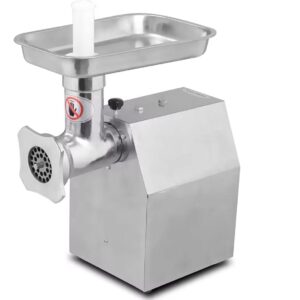
Meat grinder 120kg/h with removable head and reverse TT-12
580,00 ₾ -

Meat Grinder 220kg/h with Removable Head and Reverse TC-22
815,00 ₾ -
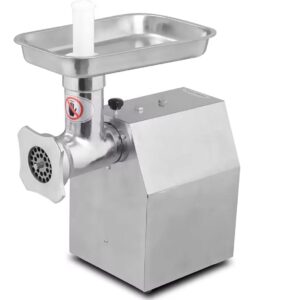
Meat grinder 220kg/h with removable head and reverse TT-22
780,00 ₾ -

Meat grinder DMS-32 700 kg/h.
3110,00 ₾ -
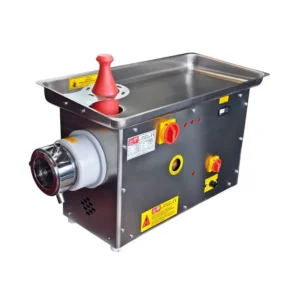
Meat Grinder with Cooling #32 700 Kg/H
4430,00 ₾ -

Meat Grinder with Removable Head 250kg/H TC-22T
1470,00 ₾ -

Professional Meat Grinder DM-22
2460,00 ₾
4. Dough Processing: The Foundation for Khinkali and Pelmeni
The most difficult material to work with in the semi-finished products industry is khinkali and pelmeni dough. This is the so-called “hard dough”, in which the water content (hydration) often does not exceed 40-45%.
Spiral Dough Mixer
Forget planetary mixers — the sloppiness of khinkali dough will burn out their motor in no time. An industrial spiral mixer is designed for such a load.
In this machine, both the stainless steel bowl itself and the powerful spiral hook rotate simultaneously. This dual principle of movement ensures the most powerful kneading of water and flour until the gluten network is fully developed. The powerful chain or belt transmission mechanism withstands the enormous resistance of the dense mass, resulting in an elastic, homogeneous dough that does not crack during cooking.
Heavy-Duty Dough Sheeter
After kneading the dough, it is necessary to roll it out to a perfectly even thickness. Here, we must strictly distinguish between techniques: pastry (puff pastry) rollers cannot withstand the strength of khinkali dough and their rollers are damaged.
You need a specialized khinkali dough sheeter , equipped with massive, reinforced steel cylinders and a powerful motor. This machine passes the dough between the rollers and rolls it with micrometric precision to the desired thickness (e.g. 2-3 mm). Even thickness is critical: if the dough is thin in some places and thick in others, the thin areas will burst during cooking, while the thick parts will remain raw and rough.
Dough press and portioner
Dough presses are used to obtain identical shapes from rolled dough. They instantly cut rings of precise diameter for khinkali or pelmeni. This device speeds up the process tenfold and ensures product standardization, which directly affects the accurate financial calculation of the business (Food Cost control).
5. Product formation: standardization and precision
If your business produces burger meat, traditional cutlets, or specialty meat products, manual shaping is commercially unprofitable and does not provide consistent results.
Burger Presses (Patty Makers)
Manual, semi-automatic or fully automatic burger presses create perfectly round, uniform weight and thickness patties in seconds.
Why is this important? A standard thickness during heat treatment ensures even frying. If the cutlets are of different thicknesses, some will burn on the consumer’s pan, while others will remain raw inside. Using a press completely eliminates this risk and gives the product a premium look.
-

Dough mixer 30 kg – 220V power supply
1920,00 ₾ -

Khinkali dough rolling machine HNM-180
410,00 ₾ -

Horizontal mixer HR-J50
2470,00 ₾ -
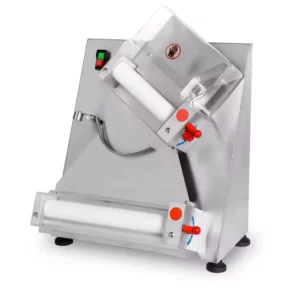
Pizza Dough Roller APD40
2480,00 ₾ -

Khinkali Dough Roller HNM-240
680,00 ₾ -

Spiral mixer H50 – with 54 liter bowl and 220V power supply
3460,00 ₾ -

Spiral mixer H30 – with 35 liter bowl, 220V
2030,00 ₾ -

DM-7 Dough Mixer – 7 kg capacity, 32 cm
1180,00 ₾ -
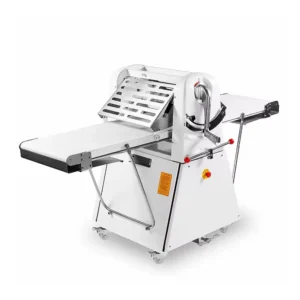
Dough Laminator LSP520
6960,00 ₾ -
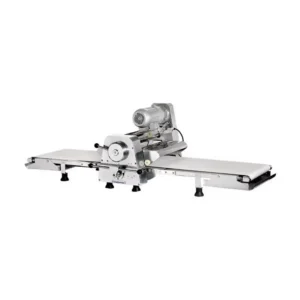
Dough Laminator TPS-520
6115,00 ₾
6. Heat treatment line: induction or gas?
Although the enterprise produces raw, frozen products, the thermal point is necessary for preparing ingredients (e.g., cooking pancake fillings, preparing sauces) or for test-tasting purposes. The choice is mainly made between induction and gas stoves.
| Characteristic | Induction cooktops | Gas Stoves |
| Working principle | Electromagnetic field (heats the boiler directly) | Open fire (combustion process) |
| Energy efficiency | Very high (90% of the heat goes to the cookware) | Low (50-60% of heat is dissipated into the air) |
| Heating speed | 30-40% faster fermentation | Standard |
| Working climate | Does not heat the kitchen air | Dramatically increases room temperature |
| Safety | High (surface remains cold without a boiler) | Risk of open flames and gas leaks |
| Infrastructure | Requires powerful electrical wiring (3 phases) | Requires special gas wiring and permits |
Modern, innovative enterprises prefer induction cookers because they significantly reduce utility costs and create a comfortable, cool working environment for staff.
7. Industrial refrigeration innovation: blast chillers and chest freezers
All of the above enormous work is wasted if the freezing stage is not done properly. Storing khinkali in a standard freezer is an industrial crime.
Blast Chiller / Shock Freezer — The Technological Heart
It usually takes 10-12 hours to freeze a product in a freezer. During this slow freezing, the water in the meat and dough forms large ice crystals (macrocrystallization). These sharp crystals break the cellular structure from the inside. When the consumer cooks such a product, the dough cracks and the meat juices spill into the pot — we get dried-out meat and spoiled dough.
A blast freezer drops the temperature to extremes (down to -18°C in just 2-4 hours with strong ventilation). This extremely rapid process causes micro-crystallization — the formation of very fine crystals that do not damage cells.
| Freezing type | Process time | Crystallization type | Result when cooking | Shelf life (safety) |
| Standard freezer | 10-14 hours | Macro-crystals (large) | Dough cracking, loss of juice, structural breakdown | Medium (risk of bacterial growth during the slowdown phase) |
| Shock Freezer | 2-4 hours | Micro-crystals (fine) | Ideal texture, preserved juice and flavor | Maximum (instantaneous blocking of bacteria) |
After shock freezing, the product retains its original weight (does not dry out) and after cooking is absolutely identical to freshly baked khinkali.
Drawer Freezers — The New Standard
The product removed from the blast chiller should be stored in the storage freezer. The pull-out freezers added to our range are the pinnacle of ergonomics and energy efficiency.
According to the laws of physics, cold air is heavy and falls. When you open the large door of a standard upright freezer, all the cold air “flows” to the floor, and warm air enters the chamber. The compressor has to spend energy again to cool it.
In the case of a pull-out (drawer) freezer, when the drawer is pulled out, the cold air remains in the drawer’s “bathroom” and does not disperse. This saves a lot of electricity and is ideal for sorting products (for example: in one drawer – dumplings, in another – beef khinkali, in the third – kebabs).
-

Freezer table refrigerator – 3 doors, 2020×600 mm
5760,00 ₾ -
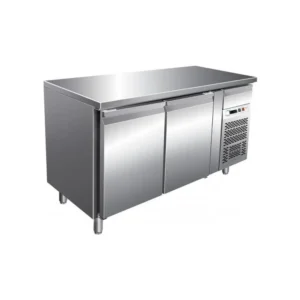
Freezer table refrigerator with 2 doors SN2100BT
3595,00 ₾ -
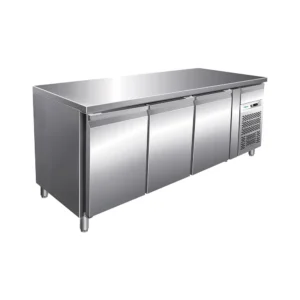
Freezer table refrigerator with 3 doors SN3100BT
4130,00 ₾ -
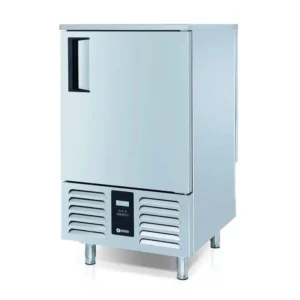
Shock refrigerator ICEINOX BLC15
16960,00 ₾ -
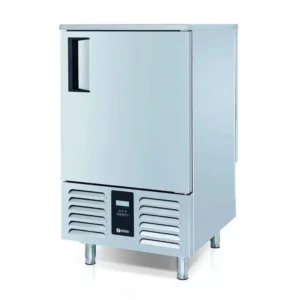
Shock refrigerator ICEINOX BLC10
10230,00 ₾ -
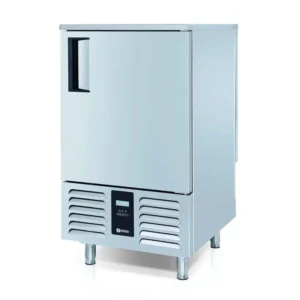
Shock refrigerator ICEINOX BLC7
8160,00 ₾ -
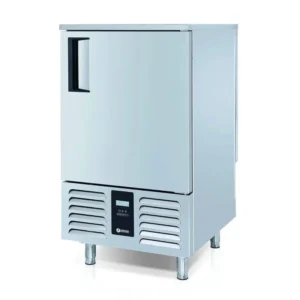
Shock refrigerator ICEINOX BLC5
6940,00 ₾ -
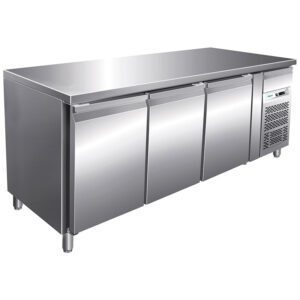
Freezer table-refrigerator SP3100BT – 3 doors
4310,00 ₾
8. Packaging and product protection from freezer burn
The final stage is to create beautiful and safe packaging. Direct contact with air (oxygen) in the freezer causes “freezer burn” — the surface of the product oxidizes, turns whitish, dries out, and loses flavor.
Vacuum Packers
For the ideal protection of meat products and semi-finished products, vacuum devices are used (preferably professional chamber-type devices). They completely pump out oxygen from a special thick bag and hermetically seal it. Vacuum packaging increases the safe shelf life of the product by at least three times, fully protects it from drying out during the freezing process and gives the consumer a clean, premium look.
Tray Sealers and MAP Technology
If your brand strategy requires you to package your product in eco-friendly or plastic containers (trays), you will need a tray sealer. This machine seals the top of the container with an airtight, transparent film.
More advanced models use MAP (Modified Atmosphere Packaging) technology — before sealing, oxygen is pumped out of the container and replaced with a mixture of protective gases (e.g., nitrogen and carbon dioxide). This technology maximizes the shelf life of the product without any chemical preservatives.
Don’t forget the technical details. The vast majority of the industrial equipment listed above (blast freezers, spiralizers, powerful meat grinders) require three-phase (380V) industrial power. When selecting a space, it is critically important to check the total electrical capacity (number of kilowatts) of the facility.
-
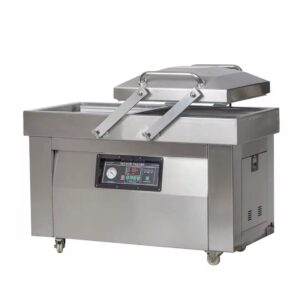
Vacuum machine DZ400/2C
4260,00 ₾ -
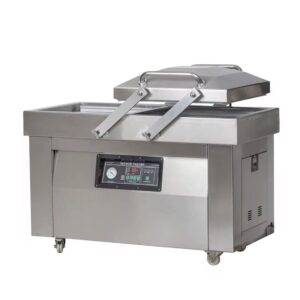
Vacuum machine DZ500/2C
5740,00 ₾ -
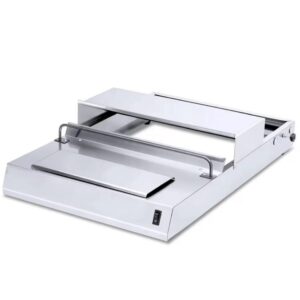
Wrapping Machine HWM-430
170,00 ₾ -
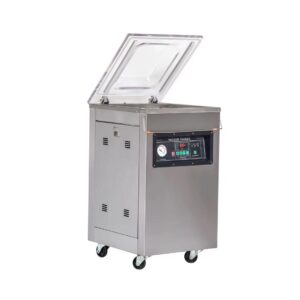
Vacuum Machine Dz500s
2460,00 ₾ -
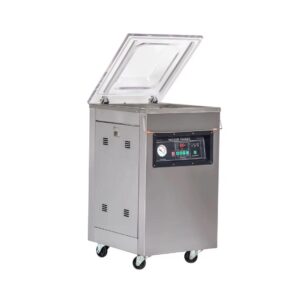
Vacuum Packaging Machine Dz400s
1870,00 ₾ -

Vacuum Sealer Dz260t
1070,00 ₾ -
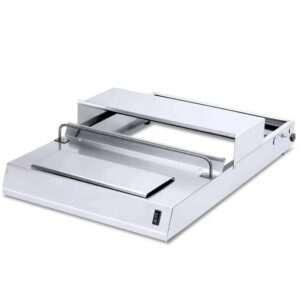
Packaging Machine HWM-550
345,00 ₾ -

Vacuum machine GNV30
290,00 ₾
9. Infrastructure and electricity calculations
It is also necessary to install powerful ventilation and air conditioning (HVAC) systems to maintain a stable temperature and clean air in production areas (especially cold stores) for the productive work of personnel.
Commercial production of semi-finished products, khinkali, kebab or pelmeni is a difficult, but highly profitable business, if it is planned technologically correctly. As we can see, every step from receiving ingredients to packaging is closely related to the accuracy of the equipment. Incorrectly selected, amateurish or cheap equipment leads to product waste (Wastage), slows down the pace of production and most importantly – poses a threat to the health of consumers and the reputation of your brand.
A wise investment in professional equipment is a direct guarantee of business stability, high productivity, and quality.
GN Industrial (gn.ge) is the undisputed leader in the supply of industrial kitchens and industrial equipment in Georgia. Our online catalog and showroom feature all the equipment that we have discussed in detail in this article, complying with European and global standards (CE, ISO, HACCP compliant).
Don’t leave your business to chance! Contact us today. Our team of professional technologists and engineers is ready to provide you with a free qualified consultation, help you accurately calculate the capacity of your enterprise, select equipment tailored to your budget and specifications, and provide their professional installation and warranty service. Create a standard with gn.ge !